
Digital Declutter: How to Organise Your Files and Tabs in a Day
A practical one-day method for clearing downloads, desktop clutter, browser tabs and cloud folders — plus...

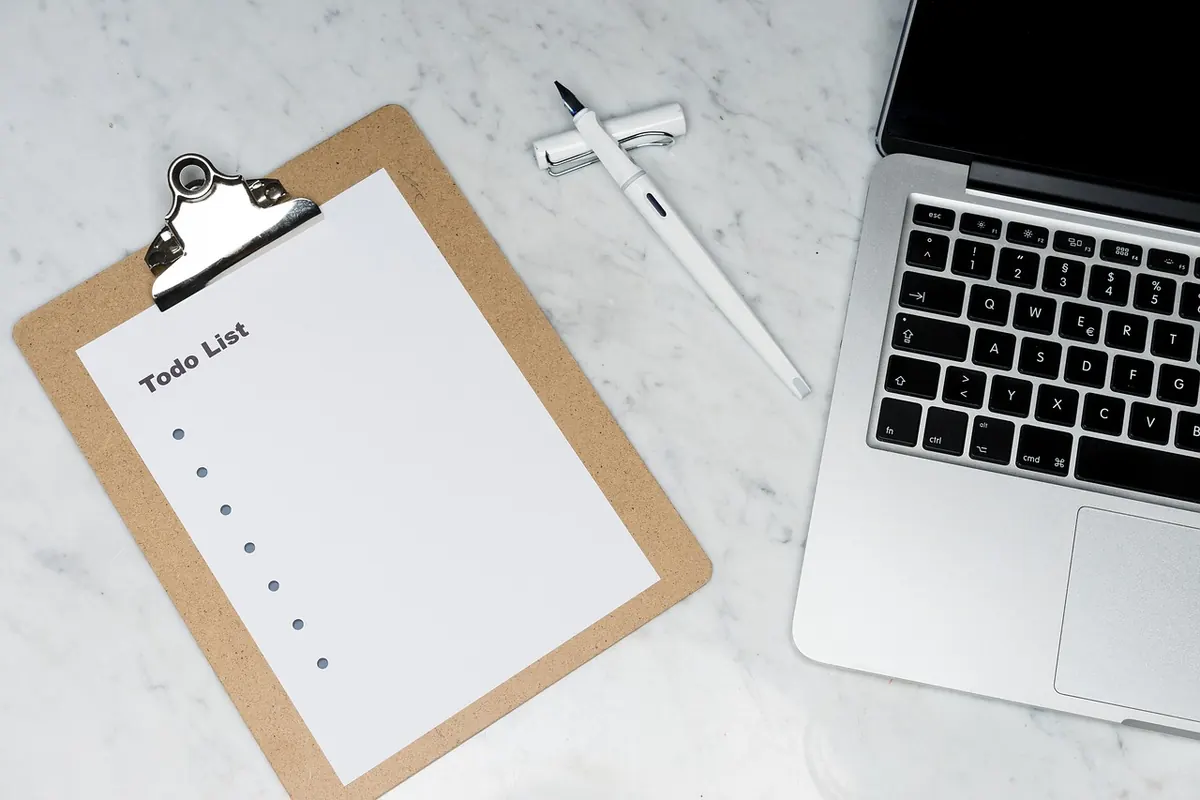
A to-do list is not a plan. It is a container, and like any container it can be filled carelessly. Most people who quietly abandon their lists do not lack discipline; they wrote something that was impossible to use. The faults are predictable, and so are the fixes.
The fastest way to break a list is to overload it. Twenty-two items, each one vaguely important, written on a Sunday evening with a clean conscience. By Tuesday the list is a monument to optimism and you are avoiding it.
A day has a fixed number of hours, and very few of them are genuinely focused once meetings, messages and interruptions are counted. Your list should describe the day you can actually have, not the one you would like.
"Sort out the accounts" is not a task. It is a feeling. When you read it, your brain does not know where to start, so it does the sensible thing and looks elsewhere.
Tasks should begin with a verb and name a specific object. Compare sort out the accounts with open the January bank file and match the first week of receipts. The second one is easy to start, which is the only quality that really matters at nine in the morning.
A vague item on a list is a decision you have postponed, not a job you have planned.
Read each item and ask: could someone else do this without asking me a question? If not, it is still too broad. Split it until the next physical or mental action is obvious.
A flat list forces you to re-decide what matters every single time you glance at it. That is exhausting, and it usually ends with you doing the easiest thing rather than the most useful one.
Decide before the day starts. Mark one to three items as genuine priorities and leave the rest unmarked. On paper, a highlighter works well. Digitally, a star, a tag or moving them to the top of the list is enough. The point is that the ranking is already made when your attention is thin.
"Launch the newsletter" is not a task either. It is a project — a result that needs several steps and probably several days. Projects do not get done; next actions do.
Keep a separate project list, and make sure every live project has one clear next action sitting on a list somewhere. When that action is finished, add the next one. This is the difference between a list that moves and a list that quietly accuses you.
Items with no estimate and no place to happen will drift. You cannot batch five phone calls if you keep discovering them one at a time between meetings.
Two habits help. First, group similar work: calls together, errands together, writing together. Switching between types of work is expensive, and batching reduces the number of switches. Second, give your most important task a slot in the calendar. If it never gets a time, it competes with everything else and usually loses.
Old items accumulate. Things you decided not to do last month sit there looking reproachful, and the list slowly turns into a record of failure rather than a tool.
A short weekly review solves this. Twenty minutes on a Friday afternoon is plenty. Go through every item and choose: do it, schedule it, hand it to someone else, or delete it. Deleting is not cheating. If an item has been carried over five times, you are not going to do it, and pretending otherwise costs you attention every day.
Two opposite errors. Some people write a list and barely look at it again, then wonder why the day ran away. Others check it every few minutes, which fragments attention and makes every small item feel urgent.
Aim for three touchpoints: five minutes in the morning to confirm the priorities, a glance at midday to adjust, and five minutes at the end of the day to close what is finished and choose tomorrow's top three. Between those points, work from the current task rather than the whole list. If something new arrives, capture it on a single trusted place — a notebook, a note on your phone — and deal with it at the next review.
None of this requires an elaborate system. It requires a list that is small enough to trust, specific enough to start, and reviewed often enough to stay honest.
Start tomorrow with three changes: cap the list, rewrite each item as a clear action, and mark your top three before you begin. Then set a repeating reminder for a twenty-minute review at the end of the week. Do that for a fortnight and you will notice something quietly satisfying — the list stops being a source of guilt and starts being the thing that gets you through the day.
Photo: viarami / Pixabay
A practical one-day method for clearing downloads, desktop clutter, browser tabs and cloud folders — plus...
Five practical checks for chair, screen, keyboard, lighting and breaks that make a UK kitchen table...
A practical guide to the Pomodoro Technique: how the 25-minute work cycle works, why it helps you start,...